


Beard care in extreme humidity demands a different approach than what works in cooler, drier climates. In humid air, beard hair doesn’t just “feel” different—it physically changes. Hair absorbs water vapor from the air, the shaft swells, the cuticle lifts, and the beard loses its shape. Heat then adds more stress by increasing oil production and sweat, creating the perfect environment for irritation and odor beneath the beard. The fix is a climate-specific routine built around three habits: a sulfate-free cleanser used two to four times per week, a lightweight oil applied daily to the skin first, and a wax-based balm to seal the cuticle before humidity forces it open.
What Humidity and Heat Actually Do to Beard Hair and Skin
Hair is hygroscopic — it absorbs water vapor from the surrounding air. In high humidity, the hair shaft swells laterally as it absorbs moisture, causing the cuticle scales to lift. That lifted cuticle increases surface roughness, creates inter-strand friction, and produces the frizz and loss of shape that men with coarse beards experience most severely in humid conditions. The swelling is not cosmetic. When the cuticle stays open, the beard absorbs even more moisture from the air, creating a feedback loop that worsens frizz throughout the day.
Heat adds a second layer of problems. As skin temperature rises, sebaceous glands produce more sebum, which builds up beneath the beard. Mixed with sweat, that oil traps salt, bacteria, and environmental particles against the skin. When sweat evaporates, it leaves salt deposits on the hair shaft and skin surface that can irritate the skin and, over time, contribute to hair brittleness.
The AC-to-outdoor cycling problem is one most men overlook. Moving repeatedly between outdoor heat and air-conditioned spaces creates alternating hygroscopic swelling (outdoors) and rapid moisture loss (indoors, where AC reduces relative humidity significantly). The result is brittle strands sitting on top of congested, irritated skin — a combination that demands an adjusted product strategy, not just more of whatever you were already using.
- Humidity causes hygroscopic shaft swelling and cuticle lifting — the direct cause of frizz
- Heat increases sebaceous gland output, leading to itch, odor, and pore congestion
- Sweat deposits salt and bacteria on the hair shaft and skin surface
- AC-to-outdoor cycling alternates between swelling and rapid moisture loss, causing brittleness
Cleansing in Humid Conditions
Over-washing strips natural oils, which increases the hair shaft's porosity and makes it absorb humidity even faster. The right frequency is two to four washes per week using a pH-balanced, sulfate-free cleanser that lifts sweat and grime without disrupting the skin's acid mantle. Ironwood's Ultra Soft Beard Wash is built for this — gentle enough for sensitive skin, effective enough to handle a full day's worth of heat and sweat.
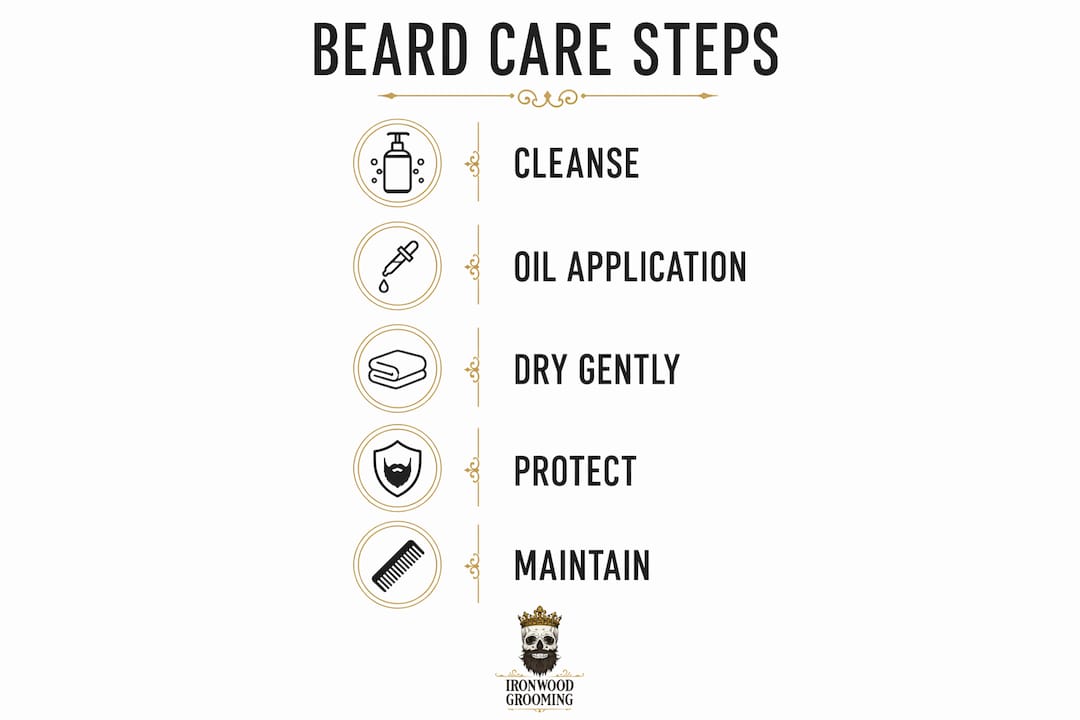
After washing, rinse with cool water. The temperature reduction causes slight cuticle contraction and reduces hygroscopic swelling at the hair surface — closing the cuticle before ambient humidity can penetrate. Pat dry with a microfiber towel rather than rubbing; rubbing creates mechanical friction that lifts the cuticle and worsens frizz, particularly on coarse beard hair with its more raised cuticle baseline.
If you live in a hard water area, a weekly clarifying wash helps clear mineral deposits that dull the beard and contribute to pore congestion. Exfoliate the skin beneath your beard once a week using gentle circular motions — removing dead skin cells reduces beardruff and keeps pores clear, which matters more when sweat is a daily reality.
- Wash two to four times weekly with a sulfate-free, pH-balanced cleanser
- Rinse with cool water after every wash to contract the cuticle
- Pat dry with a microfiber towel — never rub
- Use a clarifying wash weekly in hard water areas
- Exfoliate the skin beneath the beard once a week
Product Selection for Humid Conditions
The product choices you make in humid conditions carry more weight than in any other climate. The key variable is oil weight — specifically, the viscosity and fatty acid profile of the carrier oil you choose.
Lightweight oils — jojoba, argan, and grapeseed — absorb quickly, do not leave a heavy surface film, and have low comedogenic ratings that make them safe for daily use on skin that is already dealing with elevated sebum production from the heat. Jojoba's wax ester structure integrates with the skin surface without disrupting the natural lipid balance. Argan's oleic and linoleic acid profile conditions the hair shaft without heaviness. Grapeseed oil's high linoleic content (~70%) absorbs rapidly and leaves minimal residue.
Heavy oils — castor and coconut — are the wrong choice in peak humidity. Castor oil's high viscosity creates a thick surface film that traps heat against the skin and feels uncomfortable by midday. Coconut oil's high lauric acid content (~50%) makes it more occlusive than lighter oils, contributing to pore congestion when sebaceous glands are already overproducing. Save these for dry-climate or cold-weather use.

For application, warm three to five drops of oil between your palms and work it into the skin first, then through the hair. The skin beneath the beard is where dryness and irritation originate — the hair benefits from what the skin absorbs. Ironwood's Eviden Essential Beard Oil uses a lightweight, non-comedogenic formula designed for daily use in demanding conditions.
Follow the oil with a wax-based balm. Wax softens with body heat, improving its distribution across the hair shaft surface and creating a hydrophobic barrier that slows hygroscopic water vapor absorption. Apply after your oil to lock in hydration and maintain your beard's silhouette through the day's heat cycles. Ironwood's Eviden Vegan Beard Butter delivers this sealing effect with a light hold that does not weigh the beard down or attract dust.
For a detailed walkthrough of the layering method, read how to moisturize a coarse beard: the layering method that actually works.
- Choose jojoba, argan, or grapeseed oil — lightweight, fast-absorbing, low comedogenic rating
- Avoid castor and coconut oil in peak humidity — too viscous and occlusive for hot conditions
- Apply oil skin-first, then work through the hair
- Follow with a wax-based balm to create a hydrophobic barrier against humidity
- Use a wide-tooth comb or boar-bristle brush to distribute product evenly
Post-Sweat Protocol
Sweat left to dry in your beard is where most summer beard problems start. As sweat evaporates, it leaves salt deposits on the hair shaft and skin surface. Salt is hygroscopic — it draws additional moisture from the air and from the hair shaft itself, contributing to brittleness over time. Bacteria in the sweat layer proliferate in the warm, moist environment beneath the beard, producing the odor compounds that make an unwashed beard smell by midday.

Rinse your beard promptly after sweating with clean water to clear salt and bacterial buildup before it sets. Pat dry with a microfiber towel and apply a light beard oil to restore the hydration that sweat and heat pulled out. Skipping this step leaves the hair shaft dry and porous, which means the next round of humidity hits harder.
Antibacterial essential oils — tea tree and eucalyptus — address the bacterial component without harsh synthetic antimicrobials. Add products containing these oils to your post-sweat routine to neutralize odor-causing bacteria between washes. Keep grooming tools sanitized — wipe brushes and combs with 70% isopropyl alcohol after each use to reduce bacterial transfer back onto clean skin.
- Rinse immediately after sweating to remove salt deposits and bacteria
- Pat dry with a microfiber towel
- Apply light beard oil to restore hydration after rinsing
- Use products with tea tree or eucalyptus oil to neutralize odor-causing bacteria
- Sanitize brushes and combs with 70% isopropyl alcohol after each use
Common Humid-Climate Beard Problems and Their Fixes
Frizz: Caused by hygroscopic shaft swelling and cuticle lifting. Fix: seal the cuticle daily with a lightweight oil followed by a wax-based balm before humidity exposure. Cool water rinse after washing contracts the cuticle before ambient humidity can penetrate.
Beardruff and itch: Caused by sweat, clogged pores, and Malassezia yeast overgrowth on the skin beneath the beard — all amplified by heat and humidity. Fix: consistent cleansing two to four times per week and daily skin hydration beneath the beard. For persistent cases, read beard itch: why it happens and how to stop it.
Odor: Caused by bacterial proliferation in the sweat and sebum layer beneath the beard. Fix: prompt post-sweat rinsing, antibacterial oils (tea tree, eucalyptus) in daily products, and consistent cleansing frequency.
Split ends and breakage: Caused by AC-to-outdoor cycling that alternates hygroscopic swelling with rapid moisture loss, combined with salt deposit accumulation from dried sweat. Fix: regular trimming removes damaged ends before frizz spreads up the shaft; daily oil application maintains the hair shaft's moisture content through the cycling.
Blocked pores: Caused by elevated sebum production from heat combined with sweat and environmental particulates. Fix: consistent cleansing, lightweight non-comedogenic oils, and weekly exfoliation of the skin beneath the beard. For men with reactive skin, the sensitive skin beard oil routine covers a skin-barrier focused approach.
Key Takeaways
| Point | The science behind it |
|---|---|
| Humidity causes hygroscopic shaft swelling | Hair absorbs water vapor, swells laterally, and lifts the cuticle — the direct mechanism behind frizz in humid conditions. |
| Cool water rinse contracts the cuticle | Temperature reduction causes slight cuticle contraction and reduces hygroscopic swelling at the hair surface — closing the cuticle before ambient humidity penetrates. |
| Lightweight oils for humid conditions | Jojoba, argan, and grapeseed absorb quickly without the heavy surface film that traps heat and contributes to pore congestion when sebaceous glands are already overproducing. |
| Wax-based balm creates a hydrophobic barrier | Wax softens with body heat, distributes across the hair shaft surface, then firms as it cools — slowing hygroscopic water vapor absorption and holding the cuticle in a more closed position. |
| Post-sweat rinsing prevents salt damage | Evaporated sweat leaves hygroscopic salt deposits on the hair shaft that draw additional moisture and contribute to brittleness — rinsing promptly removes them before they set. |
FAQ
Why does my beard frizz more in humid weather?
Hair is hygroscopic — it absorbs water vapor from the air. In high humidity, the hair shaft swells laterally, causing the cuticle scales to lift. That lifted cuticle increases surface roughness and inter-strand friction, producing frizz. The effect is most pronounced in coarse beard hair, which has a more raised cuticle baseline than fine hair.
Should I wash my beard more often in summer?
Two to four times per week is the right range for most men in humid conditions — slightly more than the standard two to three times per week in temperate climates, but not daily. Over-washing strips natural oils, increasing the hair shaft's porosity and making it absorb humidity faster. The signal to wash is buildup, odor, or visible debris, not the day of the week.
Which beard oils work best in humidity?
Lightweight oils with fast absorption and low comedogenic ratings — jojoba, argan, and grapeseed — are the right choice in humid conditions. Avoid heavy oils like castor and coconut during peak heat and humidity, as they can feel too occlusive and contribute to congestion beneath the beard.
Keep Reading
- How to Moisturize a Coarse Beard: The Layering Method That Actually Works
- What Outdoor Conditions Actually Do to Beard Hair: The Science of Weather Damage
- Beard Itch: Why It Happens and How to Stop It for Good
Part of the Ironwood Regimen Series
Fighting frizz and flyaways? There's a regimen for that.
The Control Regimen is built for men who need to manage shape, frizz, and flyaways — the exact problems humidity makes worse.
See the Control Regimen →
