


A moisturizer for beard growth won’t conjure new follicles out of thin air. What it will do is protect the hair you’re already growing, keep the skin underneath healthy, and prevent the breakage and itch that send men reaching for the trimmer too soon. Your genetics set the ceiling; your grooming routine determines how close you get to it.
The two mechanisms that matter most:
- Skin hydration: A well-moisturized skin barrier reduces flaking, itch, and inflammation, all of which can cut a growth phase short.
- Reduced breakage: Conditioned, hydrated hair shafts resist splitting and snapping, so your beard actually reaches its potential length instead of stalling.
Genetics and, when needed, medical treatments determine whether new follicles activate. Moisturizers optimize the growth you already have.
Table of Contents
- Does a moisturizer really help beard growth?
- Which product type should you actually use?
- What ingredients should you look for (and avoid)?
- How to build a daily routine and what the 90-day rule means
- Ironwoodgrooming product recommendations for every beard type
- When moisturizing isn’t enough: signs you need a professional
- Key Takeaways
- The skin-first truth most beard advice skips
- Ready to build a routine that actually works?
- Sources and further reading
Does a moisturizer really help beard growth?
The honest answer: yes, but not in the way most men expect. Topical moisturizers and beard oils do not create new hair follicles. Their real job is to support existing hair health by reducing breakage and keeping the skin hydrated. That distinction matters because men who understand it stop chasing miracle oils and start building routines that actually produce visible results.
Think of it this way. A beard that breaks off at two inches never looks as full as one that reaches four. Moisture is what keeps each strand intact long enough to get there.
The skin beneath your beard is the foundation. Neglect it and you’re building on sand. Dermatology-focused guidance consistently identifies skin hydration as the primary preventative measure against the itch and flaking that push men to trim prematurely.
Beard oils rank high in editorial tests specifically because they soften hair and soothe skin beneath the beard, reducing flyaways and making daily grooming far less damaging. That conditioning effect is the real growth advantage, not any follicle-stimulating magic.
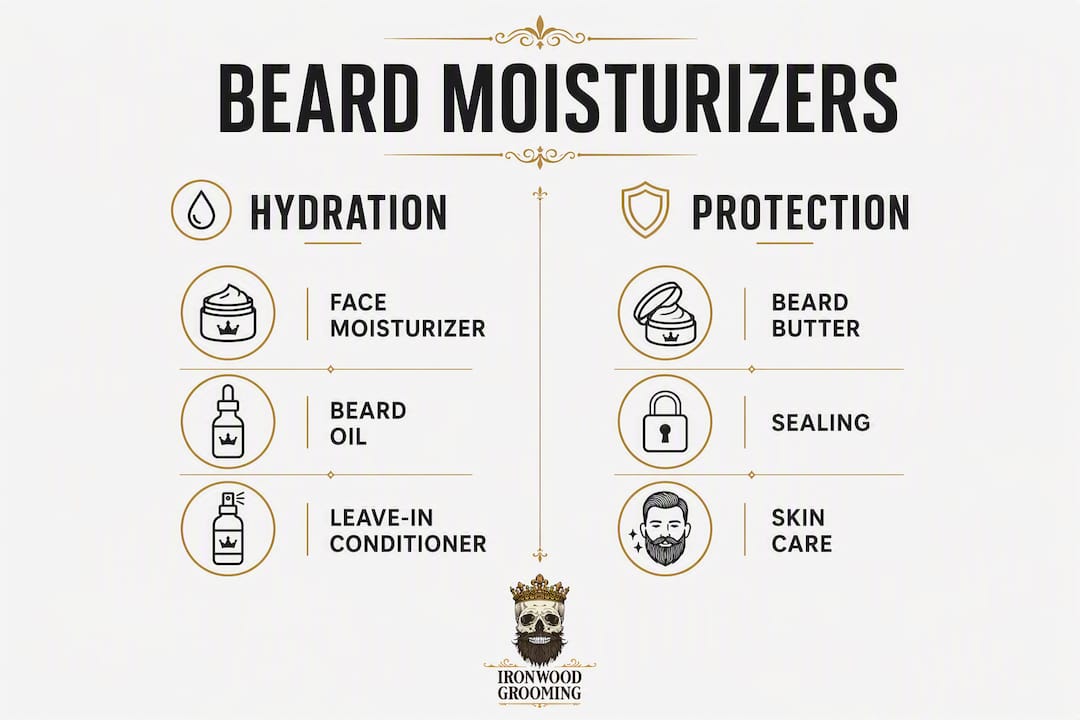
Which product type should you actually use?
Not all beard hydration products do the same job. Choosing the wrong category for your skin type or beard texture means wasted money and mediocre results.
| Product Type | Best For | Texture/Finish | Key Ingredients | How to Use |
|---|---|---|---|---|
| Face moisturizer | Dry or sensitive skin under beard | Light, absorbing | Hyaluronic acid, glycerin, ceramides | Apply to skin before beard products |
| Beard oil | Daily conditioning, all beard types | Dry/semi-matte | Jojoba, argan, grapeseed carrier oils | 2–3 drops, roots to tips after washing |
| Beard butter/balm | Coarse, thick, or very dry beards | Rich, slight sheen | Shea butter, plant waxes, carrier oils | Fingertip amount, style and seal at night |
| Leave-in conditioner | Softening and detangling | Light to medium | Low-pH conditioners, humectants | Post-wash, before oil or butter |
Face moisturizer is the foundation layer. If the skin under your beard is dry, flaky, or irritated, no amount of beard oil will fix it. A lightweight, non-comedogenic face moisturizer applied directly to the skin first addresses the root problem. For a deeper look at beard hydration science, the biology behind why this layering works is worth understanding.
Beard oil is the everyday workhorse. It conditions the hair shaft, reduces frizz, and keeps the skin from drying out between washes. The comparison between beard oil and balm comes down to whether you need light daily conditioning (oil) or more hold and structure (balm).
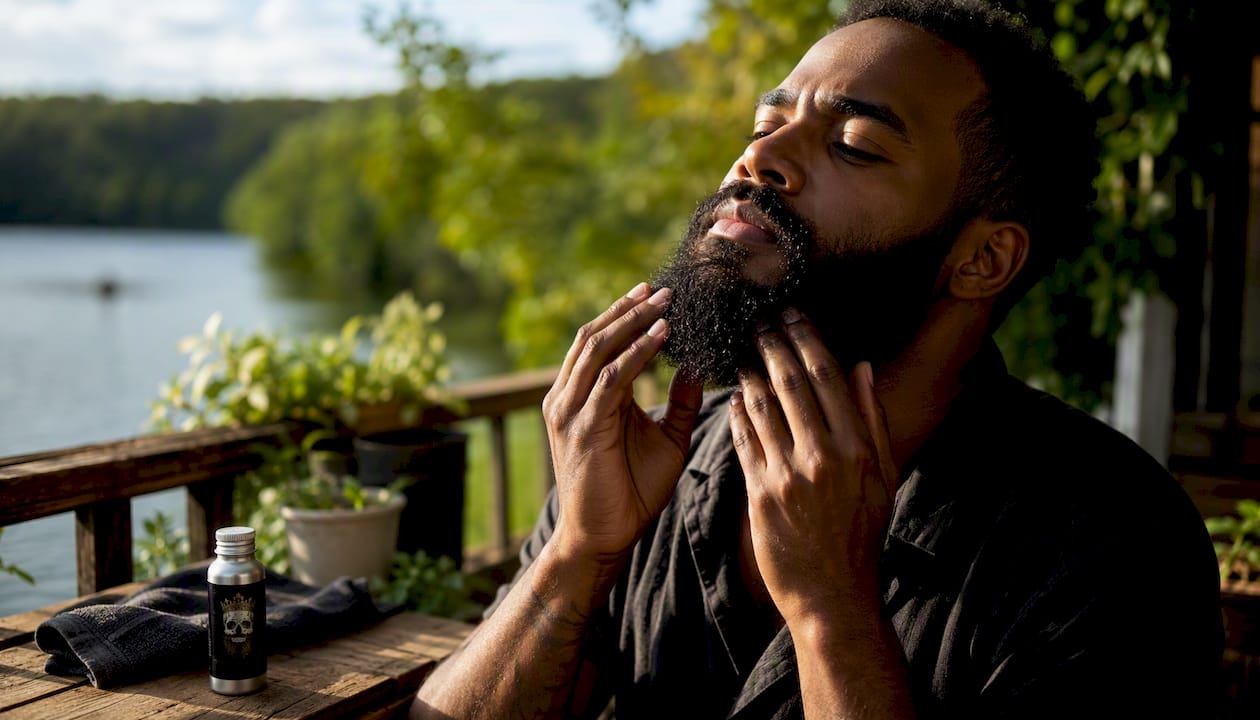
Beard butter is the heavy lifter for coarse or very dry beards. It seals in moisture more aggressively than oil and doubles as a light styling agent. Use it at night or on days when your beard needs serious recovery.
Leave-in conditioner is the underappreciated step. A low-pH formula seals the hair cuticle after washing, locking in moisture and dramatically improving softness. Most men skip it. Most men also complain their beard feels wiry.
What ingredients should you look for (and avoid)?
Your label-reading skills matter more than the marketing copy on the front of the bottle.
Look for these:
- Humectants: Glycerin and hyaluronic acid pull moisture from the air into the skin and hair shaft. They’re the workhorses of any solid beard moisturizer.
- Lightweight carrier oils: Jojoba, grapeseed, and argan are non-comedogenic, fast-absorbing, and well-suited for sensitive or oily skin under facial hair. They condition without clogging pores.
- Low-pH conditioners: These seal the hair cuticle after washing, reducing frizz and breakage. Look for them in leave-in formulas.
- Emollients: Shea butter and similar plant-based emollients smooth the hair surface and add softness without the heaviness of mineral-based alternatives.
Approach these with caution:
- Heavy comedogenic oils: Coconut oil and some others rank high on the comedogenicity scale. For men with acne-prone skin under their beard, these can clog pores and cause breakouts.
- High-alcohol formulas: Denatured alcohol (ethanol) dries out both hair and skin. Check the first five ingredients. If alcohol is near the top, put it back.
- Fragrance concentrates and essential oil blends: These are among the most common causes of contact dermatitis on the face. Men with sensitive skin should choose fragrance-free or lightly scented formulas.
One note on castor oil: it can make a beard look denser because of its heavier texture, creating the appearance of fullness on darker hair. That’s a styling effect, not a follicle effect. Useful to know, but don’t confuse the two.
Pro Tip: Before applying any new beard moisturizer to your full beard, patch-test it on the inside of your wrist or behind your ear for 24 hours. If you see redness, swelling, or itching, skip it. Coarse beard hair also absorbs product differently than fine hair, so test absorption on a small section of your beard before committing to a full application.
How to build a daily routine and what the 90-day rule means
The routine itself is simple. Consistency is the hard part.
Daily morning routine:
- Wash your beard with a gentle cleanser or beard-specific wash. Hot water strips natural oils, so keep it warm.
- Apply a leave-in conditioner or low-pH beard conditioner while the hair is still damp. Let it sit for 1–2 minutes, then rinse or leave in per the product instructions.
- Pat dry with a towel. Don’t rub.
- Apply a lightweight face moisturizer directly to the skin under your beard. Give it 1–2 minutes to absorb.
- Add 2–3 drops of beard oil, working from roots to tips. Use a wide-tooth comb to distribute evenly.
Weekly addition:
- Exfoliate the skin under your beard once or twice a week to remove dead skin cells and prevent beardruff. A gentle scrub or soft brush works well.
Night routine (for coarse or very dry beards):
- Apply a small amount of beard butter after your evening wash and moisturizer. Use a wide-tooth comb to distribute without pulling. This layering method is particularly effective for coarse or curly beards that need an overnight moisture seal.
The 90-day rule: Experts advise waiting roughly 90 days to fairly evaluate your beard’s growth pattern and density before committing to a long-term style or making major changes. A routine that feels like it’s not working at week three may look completely different at week twelve.
Most men notice reduced itch and improved softness within two to three weeks of consistent moisturizing. Visible changes in density perception, where the beard looks fuller because breakage has dropped, typically take two to three months. Take photos every two weeks. The camera doesn’t lie, and it’s the only objective way to track real progress versus wishful thinking.
Ironwoodgrooming product recommendations for every beard type
The evidence is clear: choose lightweight carrier oils for oily or acne-prone skin, heavier butters for coarse or very dry beards, and always prioritize non-comedogenic, plant-based formulas. Ironwoodgrooming builds every product around exactly those principles, using small-batch, handcrafted formulas with no fillers.
Authentic Essential Beard Oil
- Best for: Everyday conditioning, all beard types, oily or normal skin
- Product type: Beard oil
- Texture/finish: Lightweight, absorbing, no greasy residue
- Key ingredients: Plant-based carrier oils (non-comedogenic blend)
- How to use: 2–3 drops post-wash, distributed from roots to tips
- Value: The daily driver. If you use one product, make it this one.
- Best for: Coarse, thick, or very dry beards needing deep moisture and light styling
- Product type: Beard butter
- Texture/finish: Rich, creamy, slight natural sheen
- Key ingredients: Vegan plant butters and carrier oils
- How to use: Fingertip amount post-cleanse and after moisturizer; use a wide-tooth comb to distribute without pulling
- Value: The overnight seal for beards that drink moisture and still feel dry by noon.
- Best for: Sensitive skin, coarse hair, men prone to irritation or allergic reactions
- Product type: Beard butter (gentle formula)
- Texture/finish: Smooth, conditioning, non-irritating
- Key ingredients: Vegan, cruelty-free plant-based ingredients
- How to use: Apply after face moisturizer as the final sealing step; ideal for nighttime use
- Value: Built for men whose skin pushes back against most grooming products.
Layering these products correctly makes the difference between a beard that looks managed and one that looks genuinely healthy. Apply face moisturizer to the skin first, let it absorb, then work beard oil through the hair. Add butter on top for extra sealing or styling. That sequence addresses both the skin barrier and the hair shaft in one routine.
For men with thick beards specifically, the moisturizing routine for thick hair guide goes deeper on product layering and frequency adjustments.
When moisturizing isn’t enough: signs you need a professional
A solid moisturizing routine handles most beard problems. Some situations call for a dermatologist.
See a clinician if you notice:
- Sudden patchy hair loss that appears quickly, not gradually
- Scarring or shiny skin in areas where hair used to grow
- Severe inflammation, persistent redness, or signs of infection (swelling, warmth, discharge)
- Rapid hair loss before age 30 that looks different from typical slow thinning
- Itching or flaking that doesn’t respond to consistent moisturizing after 4–6 weeks
These can signal conditions like alopecia areata, scarring alopecia, or fungal infections, none of which a beard oil will fix. A dermatologist can evaluate whether topical minoxidil, prescription therapies, or other medical interventions are appropriate for your situation.
Before your appointment, document your timeline with photos, note every product you’ve used and for how long, and write down specific questions about whether your pattern of loss suggests a treatable condition. That preparation makes the visit far more productive.
This article is general information, not medical advice. Confirm your specific situation with a qualified dermatologist or healthcare provider.
Key Takeaways
A moisturizer for beard growth works by protecting existing hair and skin, not by creating new follicles. Consistency over 90 days is what produces visible results.
| Point | Details |
|---|---|
| Moisturizers don’t grow follicles | They prevent breakage and skin issues that shorten apparent beard length. |
| Skin-first routine matters | Apply face moisturizer before beard oil or butter to address the skin barrier directly. |
| 90-day patience rule | Experts recommend waiting roughly 90 days before judging growth pattern or density. |
| Ingredients to prioritize | Choose humectants (glycerin, hyaluronic acid) and lightweight carrier oils like jojoba or argan. |
| Ironwoodgrooming product fit | The Authentic Essential Beard Oil suits daily use; Uplifting and Ivow Vegan Beard Butters handle coarse or sensitive beards. |
The skin-first truth most beard advice skips
Most beard growth content focuses on the hair. The smarter focus is the skin underneath it. Men who treat beard care as a hair-only problem consistently underperform men who address the skin barrier first. Itch, flaking, and inflammation are not minor annoyances. They are the reasons most men trim too early, abandon growth attempts, and conclude their genetics are the problem when their routine is actually the problem.
The other thing worth saying plainly: men often treat beard oil as a growth cure. It isn’t. It’s a conditioning tool. That reframing is not a downgrade. A conditioning tool used correctly, consistently, and with the right ingredients produces a beard that looks fuller, feels stronger, and holds up to daily grooming without constant setbacks. That’s the real promise of a quality moisturizing routine, and it’s a promise that’s actually keepable.
Ironwoodgrooming’s plant-based, handcrafted formulas are built around this skin-first philosophy. No fillers, no shortcuts, no marketing claims that outrun the science.
Ready to build a routine that actually works?
Ironwoodgrooming’s handcrafted beard care line gives you a clean, plant-based starting point without the guesswork of sorting through ingredient labels. The Authentic Essential Beard Oil is the right daily foundation for most men: lightweight, non-comedogenic, and built for consistent use. If your beard is coarse or your skin runs dry, the Uplifting Vegan Beard Butter adds the deeper moisture seal your routine needs. Every formula is vegan, cruelty-free, and made in small batches with no filler ingredients. Shop the full beard care collection at Ironwoodgrooming and start the 90-day routine today.
Sources and further reading
| Source | Type |
|---|---|
| AAD: A dermatologist’s top tips for a healthy beard | Clinical/dermatology guidance |
| GQ: Best Beard Oil for Softer, Smoother Scruff | Editorial roundup |
| Ironwoodgrooming: How to Moisturize a Coarse Beard (Layering Method) | Brand how-to guide |
Dig deeper with these Ironwoodgrooming guides:
- Why your beard itches during the growth phase
- Beard conditioning routines for every man
- Coarse beard grooming routine for 2026
- Why your beard loses moisture daily and how to fix it

