


Stop the tugging by softening hair with warm water first, applying a pre-shave oil or glycerin lather, then shaving with the grain using a sharp blade and light pressure, letting the blade glide rather than dig. Finish with an alcohol-free balm to calm skin. A fresh blade paired with a quality beard oil from Ironwoodgrooming solves most tugging problems within a single shave.
TL;DR:
- Using a fresh, sharp blade and replacing cartridges every four to five shaves is crucial for reducing tugging on coarse hair.
- Pre-shave warming routines, such as hot towels or showers, significantly improve hair softness and decrease resistance during shaving.
- Applying pre-shave oil or glycerin cream and waiting 30 to 90 seconds enhances lubrication and minimizes skin friction.
- Mapping beard grain and avoiding against-the-grain strokes prevents razor bumps and ingrown hairs common with coarse beards.
- Consistent use of specific products like Ironwoodgrooming’s beard oils and conditioning treatments can lead to softer stubble and less tugging within a week.
Table of Contents
- What Causes Tugging When You Shave a Coarse Beard?
- Soften and Prep Coarse Facial Hair Before You Shave
- Which Razor Actually Works Best on Coarse Hair?
- How to Shave With the Grain Without Missing a Spot
- Post-Shave Care That Prevents Recurring Irritation
- Which Ironwood Grooming Products Fix Each Step of the Shave?
- Troubleshooting Persistent Tugging
- A Practical Note From Robert
- Get the Routine Right With the Majestic Beard Bundle
- Sources
What Causes Tugging When You Shave a Coarse Beard?
Tugging happens when the blade meets resistance it wasn’t built to handle. Coarse hair is thicker in diameter than fine or medium hair, and it holds its shape stubbornly even under a razor. A dull edge, dry skin, or the wrong stroke direction turns a routine shave into a wrestling match.
The fix starts before the razor ever touches your face.
Soften and Prep Coarse Facial Hair Before You Shave
Warm water and heat physically change coarse hair, swelling the shaft and opening follicles so the blade slices through cleanly instead of bending the hair sideways. A two-minute hot towel or a warm shower right before shaving does more for tug prevention than almost any other single step.
Exfoliating once or twice a week clears dead skin that traps coarse hairs at odd angles, which is a common hidden cause of snagging. Use a gentle scrub or a mild chemical exfoliant. Skip it the day you shave if your skin is already reactive.
Pre-shave oil and glycerin-based creams both cut friction, but they work slightly differently. Oil coats the hair shaft for glide; glycerin cream hydrates and softens it. Apply either, then wait 30 to 90 seconds before you start. Letting lather sit that long on tough stubble measurably improves lubrication for the first pass.
The full sequence looks like this:
- Wash your face to remove oil and grime.
- Exfoliate, if it’s been three or more days since the last time.
- Apply a hot towel or shower under warm water for one to two minutes.
- Apply pre-shave oil or glycerin cream.
- Wait 30 to 90 seconds, then shave.
Pro Tip: Layer pre-shave oil under your lather instead of choosing one or the other. The oil handles glide, the lather handles cushion, and coarse hair gets the benefit of both.
For a deeper softening routine, an overnight conditioning treatment gives coarse hair a head start before you even reach for the razor.
Which Razor Actually Works Best on Coarse Hair?
Multi-blade cartridge razors often deliver a closer cut in fewer strokes on thicker hair, which matters because every extra pass over coarse stubble is another chance to tug. If your skin flares up easily, though, a single or double-blade safety razor puts less total friction on the surface and can be gentler despite requiring more passes.
Electric shavers are a legitimate middle path. Rotary heads pivot around jaw contours that trip up manual blades, making them a solid dry-shave option for men whose beards fight back regardless of technique. Foil shavers trade some of that flexibility for a tighter, closer cut.
Blade age matters more with coarse hair than any other factor besides technique. Dense stubble dulls an edge faster than fine hair does, so replace cartridges more frequently as needed depending on beard thickness depending on how thick your beard runs.
You’ll know a blade is done when:
- It drags or catches instead of gliding smoothly.
- You hear a scraping sound rather than a clean, quiet cut.
- Nicks or redness appear where they didn’t before.
- The edge looks visibly dull or shows tiny chips under good light.
How to Shave With the Grain Without Missing a Spot
Map your beard’s grain before you lift the razor. Coarse hair often grows in more than one direction across the jaw and neck, so run a finger over dry skin first and feel which way it lies flat.
- Make your first full pass with the grain, using a 30 degree blade angle and barely any pressure. Let the weight of the razor do the work.
- Rinse the blade every two to three strokes. Clogged blades create drag, and drag on coarse hair is what turns a clean cut into a tug.
- If you need it closer, re-lather and run a light across-the-grain pass only over skin that’s still smooth and unirritated.
- Keep strokes short, three to four inches, and never repeat more than two or three passes over the same patch of skin.
Shaving against the grain on coarse or curly hair sharply raises the odds of ingrown hairs and razor bumps compared with tightly coiled hair shaved improperly. That’s the single biggest technique mistake coarse-bearded men make, and it’s the easiest one to fix.
Pro Tip: If your razor starts pulling mid-stroke, stop and re-lather instead of pushing through. Dry patches are what cause the tug you’re trying to avoid.
Post-Shave Care That Prevents Recurring Irritation
Rinse with cool water immediately after your last pass. Cool water closes pores that heat and friction just opened, and it calms redness before it sets in. Pat your face dry rather than rubbing it, then apply an alcohol-free moisturizer or an aloe-based balm. Alcohol-based aftershaves feel sharp but dry out skin that’s already stressed, which sets you up for tugging again tomorrow.
Weekly maintenance matters as much as the shave itself. Exfoliate two to three times a week to keep hair shafts from getting trapped under dead skin, and condition the beard between shaves to keep coarse strands pliable instead of brittle. A structured softening routine makes this consistent instead of an afterthought.
- Rinse blades and shake off excess water after each shave.
- Store razors upright, away from shower steam, so edges don’t corrode.
- Dry cartridges fully before their next use to extend blade life.
Which Ironwood Grooming Products Fix Each Step of the Shave?
Ironwoodgrooming built its lineup around the exact points in a shave where coarse hair fights back. Matching the right product to the right step is what turns a good routine into a reliably tug-free one.
- Authentic Essential Beard Oil: applied pre-shave, it coats each strand for glide and cuts the friction that causes drag.
- Eviden Essential Beard Oil and Crown Beard Oil: alternate softening options for men who want a different scent profile without changing the routine.
- Majestic Beard Bundle items: built for in-shave conditioning, keeping stubble pliable through every pass.
- Westerly Vegan Beard Butter: a post-shave layer that locks in moisture and keeps skin from drying out overnight.
- Stainless Moustache Comb and Moustache Wax: maintain shape and hold between shaves without weighing hair down.
A week of consistent use, oil before, butter after, is usually enough to notice softer, more manageable stubble and fewer catches on the next pass.
Troubleshooting Persistent Tugging
Still catching or pulling after dialing in prep and technique? Work through this list before assuming your skin is just difficult.
- Blade feels dull or drags: swap it, even if it hasn’t hit the four to seven shave mark yet.
- Skin feels dry mid-shave: re-lather. Don’t push a dry razor over coarse hair.
- Shaving against the grain: switch back to a single with-the-grain pass and stop there for a few days.
- Clogged blade: rinse every two to three strokes, not just at the end.
- Active razor bumps: drop to fewer blades and one with-the-grain pass over affected areas until skin calms down.
- Bumps persist beyond two weeks or worsen: see a dermatologist. Chronic pseudofolliculitis barbae sometimes needs a professional approach beyond routine changes.
A Practical Note From Robert
Two things fix tugging faster than anything else in practice: swapping the blade every four to five shaves and adding a pre-shave oil to the routine. Men who commit to just those two changes report smoother shaves inside a week, without touching anything else about their technique.
— Robert
Get the Routine Right With the Majestic Beard Bundle
Building this routine piece by piece takes trial and error. The Majestic Beard Bundle skips that step, pairing pre-shave oil with conditioning essentials so your prep, shave, and aftercare are covered from one order instead of three separate guesses. If you’d rather start smaller, the Authentic Essential Beard Oil alone handles the pre-shave glide that stops most tugging at the source.
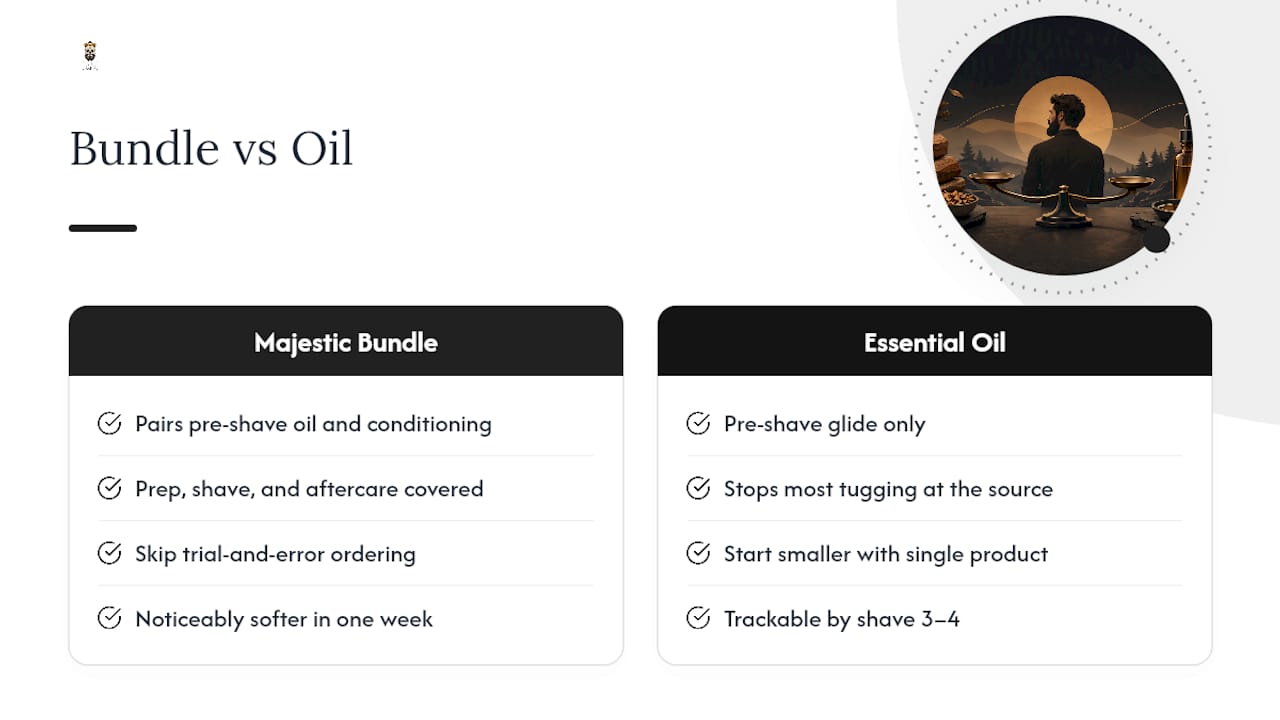
Expect noticeably softer stubble and less drag within the first week of consistent use, not an overnight miracle, but a real, trackable difference by shave three or four. Order either option today and give your next shave the prep it actually needs.
Sources
- Face shaving tips: Coarse or tough beard — Gillette
- 7 Best Razors for Men — Men’s Health
- Best electric razors for men — Good Housekeeping
- The Coarse Hair Shaving Guide — SmartShave

