


Wiry beard hair is not a grooming failure. It’s a structural outcome — the result of a thicker hair shaft, a more raised cuticle, and lower natural oil coverage than scalp hair receives. Beard hair averages around 0.1 mm in diameter, nearly double the thickness of scalp hair, a difference documented in Robbins’ research on hair fiber structure. That alone explains why your beard feels rough while the hair on your head stays soft. Add genetics, androgen sensitivity, hard water, and inconsistent grooming, and you have the full picture of why beard hair grows wiry — and what you can actually do about it.
Why Beard Hair Is Structurally Different from Scalp Hair
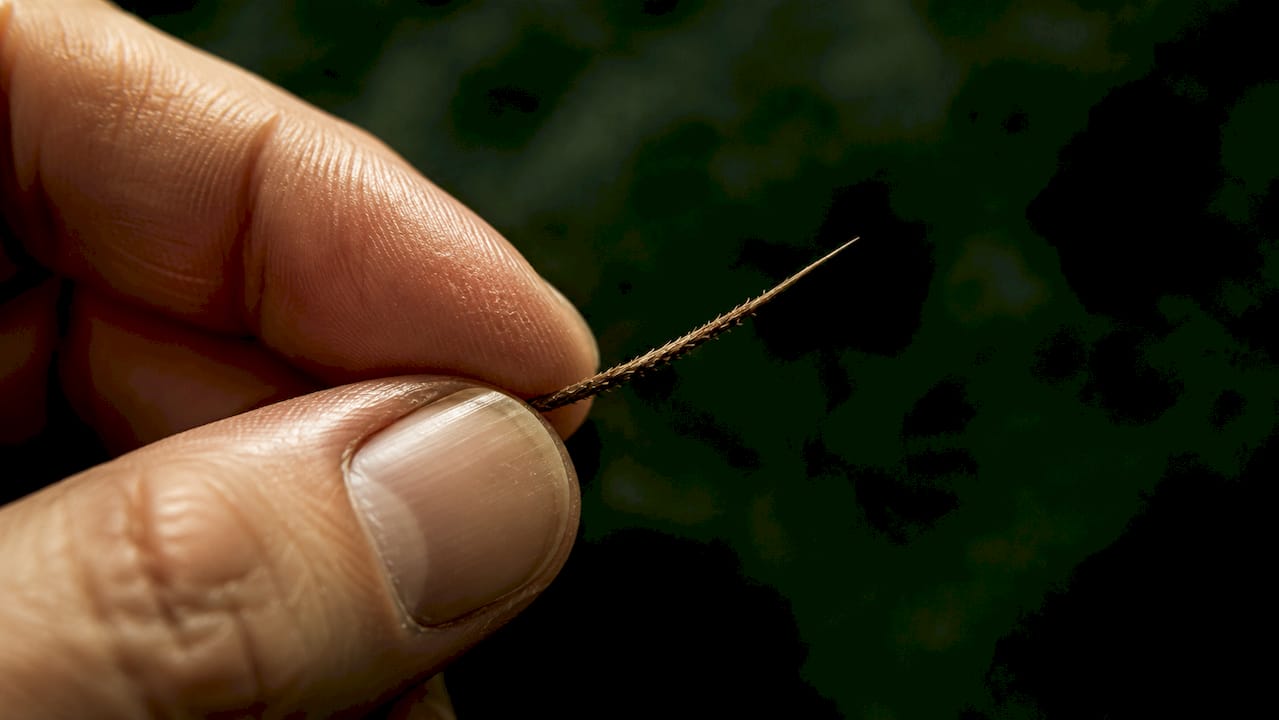
Beard hair is physically different from scalp hair at the structural level. The average beard hair diameter sits at roughly 0.1 mm — nearly twice that of scalp hair at 0.05–0.07 mm. That extra mass makes each strand resist bending, which is exactly what creates the stiff, wiry feel you notice when you run a hand through your beard.
The cuticle layer compounds the issue. Beard hair has a thicker, more raised cuticle than scalp hair. A raised cuticle increases friction between strands, scatters light unevenly, and makes moisture harder to retain. The result is hair that feels rough and looks dull rather than smooth.
DHT — the androgen hormone that drives beard growth — also influences coarseness. Research by Sawaya & Price shows that facial follicles respond strongly to DHT, producing thicker, faster‑growing strands. This is why beard texture changes noticeably during puberty and again in a man’s twenties as androgen exposure continues — not because DHT “accumulates,” but because follicles become more responsive over time.
| Hair type | Average diameter | Cuticle thickness | Natural oil coverage |
|---|---|---|---|
| Scalp hair | ~0.05 mm | Thinner, smoother | Higher — dense sebaceous glands |
| Beard hair | ~0.1 mm | Thicker, more raised | Lower — facial skin produces less sebum |
Pro tip: Run your thumbnail along a single beard hair. If it catches or drags, your cuticle is raised — and your beard needs moisture and conditioning, not just washing.
How Environment and Grooming Habits Make Wiriness Worse
External factors are the most controllable causes of wiry beard hair — and most men underestimate how much their environment affects texture. Cold, dry air reduces sebum production and pulls moisture from the hair shaft. Low humidity worsens the problem in winter or dry climates.
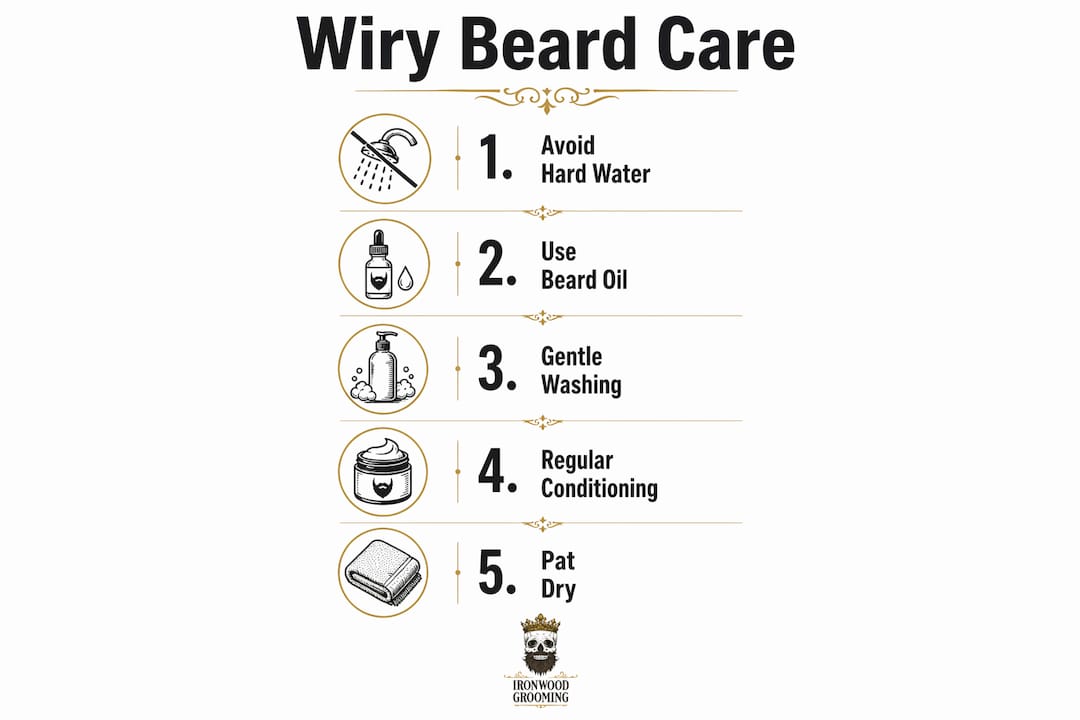
Hard water is one of the most overlooked contributors to coarse beard texture. Studies on hard water and hair show that calcium and magnesium ions deposit on the hair shaft, raise the cuticle, and increase surface friction. This buildup makes beard hair feel rough even after conditioning. A chelating shampoo or a shower filter with ion‑exchange media can noticeably reduce mineral deposits.
Washing habits matter too. Overwashing with harsh soaps strips the natural oils your skin works hard to produce. Facial skin produces less sebum than the scalp, so daily washing removes protective oils faster than your skin can replace them.
- Cold, dry air: Pulls moisture from the hair shaft.
- Hard water: Mineral deposits raise the cuticle and increase roughness.
- Harsh soaps: Strip natural oils and disrupt skin pH.
- Overwashing: Removes sebum faster than the skin can replenish it.
- No post‑wash routine: Leaves hair unprotected and prone to dryness.
Pro tip: If your tap water leaves white residue on glass or fixtures, you likely have hard water. A weekly chelating wash or a shower filter can make a measurable difference.
Grooming Habits That Actually Soften and Tame Wiry Beard Hair
Consistent daily habits produce more change in beard texture than any single product. The goal is to condition the cuticle, support the skin beneath, and reduce moisture loss — all of which make wiry hair feel softer and more controlled.
- Wash two to three times per week with a sulfate‑free beard wash. Daily washing strips sebum and worsens coarseness.
- Apply beard oil immediately after washing. Damp hair doesn’t “absorb” oil — but water reduces friction, allowing oils like jojoba and argan to spread more evenly across the cuticle. For the full skin‑first approach, read Argan Oil for Beards: The Skin‑First Method.
- Brush daily with a boar bristle brush. Brushing distributes oils evenly and trains the beard to lie flat. See Why Your Beard Needs Daily Brushing.
- Use a beard balm for hold and protection. Balm adds a light protective layer that reduces frizz and shields against dry air.
- Trim every two to four weeks. Split ends make wiry texture worse. Clean cuts improve feel and appearance.
| Routine element | With consistent care | Without care |
|---|---|---|
| Beard oil daily | Smoother cuticle, reduced moisture loss | Dry, raised cuticle persists |
| Daily brushing | Even oil distribution, trained growth | Tangles, uneven texture |
| Sulfate‑free wash | Sebum preserved, pH balanced | Stripped oils, worsened dryness |
| Regular trimming | Healthy ends, cleaner look | Split ends worsen roughness |
How Genetics and DHT Shape Your Beard’s Texture
Genetics set the baseline for your beard’s texture. Follicle count, follicle shape, and androgen receptor sensitivity are inherited traits — and they determine whether your beard grows straight, curly, coarse, or fine.
DHT drives beard growth more than any other hormone. Higher DHT sensitivity produces faster growth and thicker strands. This sensitivity is inherited, which is why some men grow dense, wiry beards while others grow softer, finer ones.
- Follicle shape: Oval follicles produce curly or wavy beard hair; round follicles produce straight strands.
- Follicle density: More follicles per square centimeter create a fuller, often coarser beard.
- DHT receptor sensitivity: High sensitivity produces thicker, wirier strands.
- Cuticle thickness: Genetically thicker cuticles resist moisture and feel rougher.
Understanding your genetic baseline matters because it sets realistic expectations. Grooming can soften and manage wiry hair — but it cannot turn coarse beard hair into fine scalp hair. The goal is the best version of your beard, not someone else’s.
Key Takeaways
| Point | Details |
|---|---|
| Beard hair is structurally thicker | At ~0.1 mm, beard hair is nearly twice as thick as scalp hair. |
| Facial skin produces less oil | Intentional oil application compensates for lower sebum output. |
| Hard water worsens texture | Mineral deposits raise the cuticle and increase roughness. |
| Daily brushing trains the beard | Brushing distributes oils and reduces wiriness over time. |
| Genetics set the baseline | DHT sensitivity and follicle shape determine natural texture. |
What I’ve Learned from Years of Managing a Coarse Beard
The biggest mistake men make is treating their beard like scalp hair. They wash it daily, skip the oil, and then wonder why it feels like steel wool by noon. Beard hair is a different material entirely — it needs less washing and far more moisture.
The second mistake is expecting fast results. Softening a wiry beard takes four to six weeks of consistent effort. Most men quit too early. The biology doesn’t respond to short bursts — it responds to daily discipline.
What actually works is simple: oil every day, brush every day, wash two to three times per week, and trim regularly. The Coarse Beard Grooming Routine isn’t complicated — the challenge is consistency.
One thing that surprised me was how much hard water was sabotaging my routine. I was using good products and still getting rough results. Switching to filtered water changed my beard within two weeks. If you’re doing everything right and still struggling, check your water.
— Roberto, Ironwood Grooming
Keep Reading
- Why Your Beard Needs Daily Brushing: A Coarse Beard Guide
- Coarse Beard Grooming Routine Explained
- Why Beard Products Melt in Heat: Causes, Storage, and Fixes
Part of the Ironwood Regimen Series
New to beard care? Start here.
The Beginner Beard Regimen is the complete start-here guide — cleanse, hydrate, seal — for guys building their first real routine.
See the Beginner Regimen →
