


Your zero-waste men’s grooming checklist comes down to seven core swaps: replace disposable razors with a safety razor, recycle blades through a blade bank, switch bottled shampoo and body wash to solid bars, use a solid or paste deodorant, grab a bamboo toothbrush, upgrade to a metal or wooden comb, and store beard care in refillable glass tins. That’s the whole foundation. Everything else is refinement.
Here’s your TL;DR before we go deeper:
- Shaving: Safety razor or straight razor instead of plastic cartridge systems
- Blade disposal: Dedicated metal blade bank, then metal recycling or Terracycle take-back
- Hair: Solid shampoo bar and conditioner bar instead of plastic bottles
- Body: Solid soap bar instead of liquid body wash in plastic pumps
- Deodorant: Solid stick or paste deodorant in a cardboard or glass container
- Beard care: Beard oil and balm in glass bottles or refillable tins, plant-based formulas
- Tools: Bamboo toothbrush, steel or wooden comb, natural-bristle brush
- Packaging: Prioritize glass, metal, cardboard, and refillable formats over single-use plastic
A safety razor blade typically provides 3–5 high-quality shaves before requiring replacement, and the blade itself is a thin strip of recyclable steel. That’s the first big win. Ironwoodgrooming’s American steel combs and small-batch beard oils in glass are built around the same principle: durable, purposeful, and built to last.
Table of Contents
- What does a zero-waste grooming checklist actually cover?
- How long do zero-waste grooming products last?
- How do you safely dispose of blades and grooming packaging in the U.S.?
- What should your starter kit include?
- How do you transition to zero-waste grooming in 30 days?
- Why do small-batch, plant-based products actually work better?
- Key Takeaways
- The case for committing to this fully
- Ironwoodgrooming’s zero-waste grooming lineup
- Useful sources and further reading
What does a zero-waste grooming checklist actually cover?
A complete zero-waste grooming routine touches six categories: razors, hair care, body care, deodorant, beard care, and tools. Each one has a direct, better-performing swap.
Razors and shaving
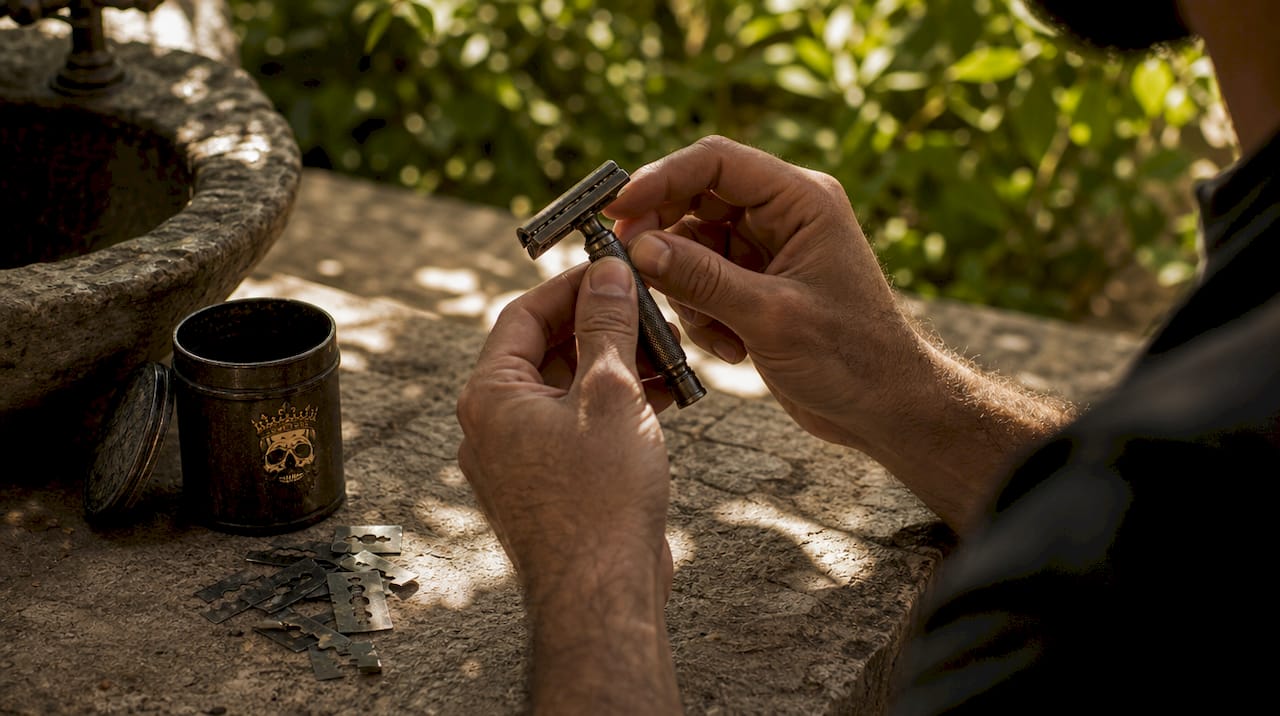
The single biggest plastic offender in most men’s kits is the disposable or cartridge razor. One double-edge safety razor can replace hundreds of disposable razors over its lifetime. The handle is metal and lasts years. The blades are thin steel wafers that cost a fraction of cartridges. You’re not sacrificing a close shave either. A well-maintained safety razor, used at the right angle, delivers a cleaner result than most multi-blade cartridges.
Shampoo, conditioner, and body wash
Solid bars are concentrated and water-free, which means they last longer per ounce than their bottled counterparts and carry a lower transport carbon footprint per use. A quality shampoo bar can outlast two to three bottles of liquid shampoo. Pair it with a conditioner bar or a leave-in balm stored in a small tin, and you’ve eliminated three plastic bottles from your shower.

Deodorant
Solid deodorant sticks in cardboard tubes or paste deodorants in glass jars are the cleanest swap here. Aluminum-free formulas using baking soda, arrowroot, or magnesium work well for most men. The adjustment period is real, typically one to two weeks as your skin recalibrates, but performance stabilizes quickly.
Beard care
This is where quality of ingredients matters most. A beard oil or balm in a glass bottle or refillable tin, made with plant-based carriers like jojoba and shea, does more for coarse beard hair than a watered-down mass-market product in a plastic tube. Multi-use formulas that double as skin moisturizers cut down on the number of products you need altogether. Check out Ironwoodgrooming’s eco-friendly beard wash guide for a practical breakdown of low-waste beard care options.
Tools
Bamboo toothbrushes, reusable cotton rounds, and refillable tins are the easiest category to swap because they require zero technique adjustment. A steel or wooden comb replaces a plastic one permanently. A natural-bristle shaving brush replaces a disposable foam can. These are one-time purchases that last years.
Pro Tip: Solid bars lather better with a small amount of water worked in first. Don’t apply them dry. A few seconds of prep gets you full lather and extends the bar’s life significantly.
How long do zero-waste grooming products last?
The upfront cost of switching to a zero-waste routine is real, but the long-term math works strongly in your favor. Most durable items pay for themselves within three to six months.
| Item | Typical Lifespan | Replacement Cost (approx.) |
|---|---|---|
| Disposable razor (cartridge) | 5–10 shaves per cartridge | $3–$5 per cartridge pack |
| Safety razor handle | 10+ years | $25–$60 one-time |
| Safety razor blade | 3–5 high-quality shaves | $0.10–$0.30 per blade |
| Shampoo bar | 60 washes | $8–$16 per bar |
| Solid deodorant | 2–4 months | $8–$14 per unit |
| Bamboo toothbrush | 3 months | $3–$6 per brush |
| Beard oil (glass, 1 oz) | 4–8 weeks | $15–$30 per bottle |
| Steel comb | Lifetime | $20–$40 one-time |
The transition itself takes 2–6 weeks from first swap to a fully functioning routine. Most men start seeing cost savings by month three, once the one-time tool purchases are behind them. A safety razor blade at $0.10–$0.30 per unit versus a cartridge at $3–$5 is the starkest example. Over a year of daily shaving, that gap adds up to real money.
A double-edge safety razor can replace hundreds of disposable razors over its lifetime, cutting both plastic waste and long-term shaving costs.
How do you safely dispose of blades and grooming packaging in the U.S.?
Safe disposal is the step most guides skip. Here’s how to handle it correctly.
Blade disposal
Never drop loose blades into a recycling bin. The edges are a safety hazard for sorting facility workers, and loose metal pieces often fall through sorting machinery.
- Use a blade bank: A small metal container (often sold with safety razor kits) collects used blades safely. When full, tape the slot shut, label it “used razor blades,” and take it to a metal recycling facility.
- Terracycle: Where a Terracycle razor and blade recycling program is available in your area, it accepts blades, handles, and cartridges. Check availability at terracycle.com.
- DIY blade bank: A sealed tin or an old metal altoids-style container works as a blade bank until you source a dedicated one.
Glass and metal containers
Rinsed glass jars and metal tins are accepted by most U.S. municipal recycling programs. Remove pumps and mixed-material caps before recycling, since those components often contain mixed plastics that contaminate glass streams. A quick rinse is enough; you don’t need to scrub them clean.
Plastic packaging you’re phasing out
Most rigid plastic bottles (HDPE #2, PET #1) are accepted curbside in the U.S. Flexible plastics, aerosol cans, and mixed-material tubes typically are not. Check your local municipality’s guidelines at earth911.com for what’s accepted in your zip code.
Pro Tip: Set up your blade bank on day one, before you even start shaving with the new razor. Having the container ready removes the friction of figuring out disposal mid-routine.
Here’s a quick action checklist for handling your old products:
- Collect all old cartridge razors and plastic packaging in one bag.
- Check earth911.com for local rigid plastic recycling options.
- Rinse glass jars and metal tins, remove caps, and place in curbside recycling.
- Take aerosol cans (fully empty) to a household hazardous waste drop-off if your municipality requires it.
- Set up a blade bank for ongoing blade collection.
- Look up your nearest Terracycle drop-off for any items your curbside program won’t accept.
What should your starter kit include?
A solid starter kit for a minimal grooming setup fits in a single bag and covers every daily need. Here’s what to buy first:
- Safety razor handle (stainless steel, double-edge): $25–$60
- Safety razor blades (sampler pack of 5–10 brands): $5–$15
- Shaving brush (natural or synthetic fiber): $15–$30
- Solid shampoo bar: $8–$16
- Conditioner bar or leave-in tin: $10–$18
- Solid deodorant (cardboard or glass packaging): $8–$14
- Beard oil or balm in glass: $15–$30
- Bamboo toothbrush: $3–$6
- Steel or wooden comb: $20–$40
Total starter investment: roughly $109–$229 depending on brand tier. That sounds like a lot until you compare it to 12 months of cartridge refills, bottled shampoo, and plastic-packaged deodorant. Most men recoup the cost within four to six months.
When shopping, look for refill programs (some solid deodorant and beard care brands offer them), recyclable outer packaging, and concentrated formulas. A smaller product with a higher ingredient density almost always outlasts a larger, diluted one.
Pro Tip: Buy a sampler pack of blades from different manufacturers before committing to a bulk order. Blade geometry varies, and the “best” blade depends on your skin type and beard coarseness. Five shaves with three different brands tells you more than any review.
Ironwoodgrooming’s compact grooming kit guide walks through how to build this kind of kit without overbuying.
How do you transition to zero-waste grooming in 30 days?
The key is replacing one category at a time. Trying to swap everything on day one creates friction and increases the chance you abandon the whole effort. Here’s a week-by-week plan that works.
-
Week 1: Audit and easy swaps. Go through your current kit and list every item in plastic packaging. Replace your toothbrush with a bamboo one and swap your deodorant to a solid format. These two changes require zero technique adjustment and cost under $20 combined.
-
Week 2: Hair and body. Order a shampoo bar and a solid soap bar. Use up your current bottled products or donate them rather than throwing them away. Order your safety razor kit so it arrives before Week 3.
-
Week 3: Learn the shave. Your safety razor arrives. Practice the technique: hold the handle at a 30-degree angle to your skin, use zero downward pressure, and let the weight of the razor do the cutting. Do one or two shaves before committing to a full routine. This is the week most men feel uncertain, and it passes fast.
-
Week 4: Beard care and recycling setup. Swap your beard products to glass or tin packaging. Set up your blade bank. Run through the disposal checklist from Section 4. By the end of this week, your routine is fully converted.
Pro Tip: On your first safety razor shave, go with the grain only. No against-the-grain passes until you’ve done at least five shaves and know how your skin responds. Patience here prevents irritation and builds real confidence with the tool.
For a deeper look at building a morning and evening routine around these products, Ironwoodgrooming’s complete beard care routine guide covers the full structure.
Why do small-batch, plant-based products actually work better?
The performance argument for zero-waste grooming is stronger than most men expect. According to Packaging Digest, 90% of Gen Z consumers expect brands to reduce their environmental impact, and that expectation is reshaping what manufacturers put inside the bottle, not just what the bottle is made of.
Small-batch, plant-based formulas use nutrient-dense carriers like jojoba oil and shea butter at meaningful concentrations. Mass-market alternatives often dilute these same ingredients with water, silicones, and synthetic fillers to hit a price point. For men with coarse beards or sensitive skin, that dilution is the difference between a product that works and one that just sits on the surface. Ironwoodgrooming’s vegan beard care formulas are built on exactly this principle: fewer ingredients, each one earning its place.
“Small-batch production means every formula is made in limited quantities, which allows for tighter quality control and fresher ingredients than high-volume manufacturing allows.” — Ironwood Grooming
The EWG’s Skin Deep database tracks ingredient safety across thousands of personal care products. Men with sensitive skin can use it to verify that the ingredients in any grooming product meet a clean standard before buying.
Pro Tip: When evaluating a beard oil or balm, check the first three ingredients. If water or a synthetic filler appears in the top three, the formula is diluted. A concentrated product lists an active carrier oil first.
Key Takeaways
A zero-waste grooming routine built around durable tools, solid bars, and plant-based formulas in recyclable packaging reduces both plastic waste and long-term grooming costs, with most men completing the transition in 2–6 weeks.
| Point | Details |
|---|---|
| Safety razor payoff | Each blade provides 3–5 high-quality shaves and costs a fraction of cartridges, cutting plastic and spending over time. |
| Solid bars outlast bottles | Concentrated shampoo and soap bars last longer per use than liquid equivalents and eliminate plastic packaging. |
| Blade disposal matters | Use a dedicated blade bank, then recycle through metal streams or a Terracycle program. |
| Transition in stages | A week-by-week swap over 30 days reduces friction and builds lasting habits without disruption. |
| Ironwoodgrooming fit | Small-batch beard oils in glass and American steel combs align directly with a zero-waste men’s kit. |
The case for committing to this fully
Most men who try one zero-waste swap and stop there are leaving the biggest gains on the table. The real shift happens when you treat the whole routine as a system rather than a collection of individual products.
Here’s what I’ve seen get overlooked: the technique gap. Men abandon safety razors not because the razor is inferior but because they never adjusted their angle or pressure. They get a nick on day two and go back to a cartridge. The razor wasn’t the problem. The same thing happens with solid deodorant. The two-week adjustment period feels like failure when it’s actually just biology. Stick with it and the performance catches up.
The other thing worth saying plainly: zero-waste grooming is not a sacrifice. A well-made safety razor outperforms a cartridge. A concentrated beard oil with jojoba and shea does more for coarse hair than a watered-down drugstore alternative. A steel comb lasts a lifetime. The sustainability argument is real, but the performance argument is just as strong, and for most men, that’s what actually makes the habit stick.
Ironwoodgrooming’s zero-waste grooming lineup
If you’re building your kit from scratch, Ironwoodgrooming offers exactly the kind of products this checklist calls for: small-batch beard oils in glass bottles, plant-based balms and butters, handcrafted soaps, and American-made steel combs built to last a lifetime. Every formula is vegan-friendly, cruelty-free, and designed specifically for coarse beards and sensitive skin, with no fillers or synthetic shortcuts.
The Zombie Beard Comb is a standout example: American steel, built to replace every plastic comb you’ve ever owned, and designed to work through thick, coarse beard hair without snagging. It’s the kind of one-time purchase that belongs in every serious grooming kit.
For men with sensitive skin, the sensitive skin regimen at Ironwoodgrooming pairs clean-ingredient formulas with a structured routine that won’t cause irritation. Browse the full lineup at ironwoodgrooming.com and start with one product that fits your current routine.
Useful sources and further reading
These resources give you deeper guidance on recycling programs, ingredient safety, and sustainable grooming practices in the U.S.:
- EWG Skin Deep Database — Search ingredient safety ratings for any personal care product before you buy.
- Terracycle Razor Recycling Program — Find drop-off locations or mail-in options for blades, cartridges, and handles.
- Earth911 Recycling Locator — Enter your zip code to find local recycling options for plastics, glass, and metal.
- Sustainable Men’s Grooming Essentials — Verdiuvo — Product category breakdowns for men building a green grooming kit.
- Eco-Friendly Beard Wash Guide — Ironwoodgrooming — Ironwoodgrooming’s own guide to low-waste beard care and product selection.

